DIRECT ROVING About
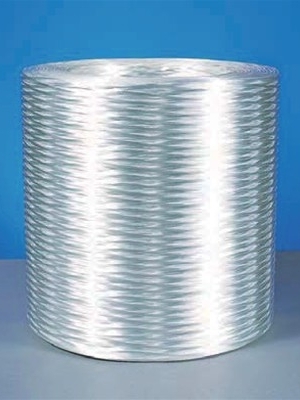
Fiberglass Direct Roving is a continuous filament E-glass fiber designed for reinforcement in composite applications. It offers high tensile strength, excellent wet-out, good resin compatibility, and consistent performance. It is widely used in FRP products, pultrusion, filament winding, pipe & tank manufacturing, panels, automotive components, and other composite applications.
Versatile Applications in CompositesDIRECT ROVING seamlessly adapts to various manufacturing techniques such as weaving, pultrusion, filament winding, and knitting. Its compatibility with multiple resin systems and robust tensile properties make it a preferred reinforcement material in FRP products, pipe manufacturing, automotive parts, tanks, and profiles.
High Quality & Reliable PerformanceWith a filament diameter ranging from 13 to 24 microns and moisture content below 0.1%, these E-glass fibers guarantee excellent mechanical performance while minimizing processing issues. The silane-based surface treatment enhances resin adhesion for optimal composite strength.
FAQ's of DIRECT ROVING:
Q: How is DIRECT ROVING manufactured?
A: DIRECT ROVING is produced through the direct roving process, where molten E-glass is drawn through precision bushings, cooled, treated with a silane-based sizing, and wound directly onto cylindrical spools. This results in continuous, high-strength filament strands suitable for a range of composite applications.
Q: What are the typical uses of DIRECT ROVING in industry?
A: DIRECT ROVING serves as a reinforcement material in composites for the pipeline, wire, and automotive industries. It is commonly utilized in making FRP products, pipes, tanks, profiles, and automotive components, thanks to its excellent mechanical and thermal properties.
Q: When should I choose DIRECT ROVING over other fiber forms?
A: DIRECT ROVING is ideal when continuous, high-tenacity reinforcement is needed-particularly in processes like weaving, pultrusion, filament winding, or knitting. Its customizable spool size and tex range offer flexibility for various process requirements and product designs.
Q: Where is DIRECT ROVING commonly applied?
A: This product is widely applied in manufacturing facilities specializing in composite materials, especially those producing FRP pipes, tanks, windings, wire reinforcements, automotive parts, and structural profiles, both for industrial and automotive sectors.
Q: What are the benefits of using E-glass based DIRECT ROVING?
A: E-glass DIRECT ROVING offers high tensile strength, corrosion resistance, low moisture content, and compatibility with major resin systems. Its strong thermal stability (up to 600C) further extends its suitability for demanding composite applications.
Q: How does the silane-based sizing affect performance?
A: The silane-based sizing on DIRECT ROVING enhances their bond strength with different resin systems, promotes easier processing, reduces fuzz generation, and ultimately improves the durability and mechanical integrity of the final composite products.

 Send Inquiry



 Send Inquiry


 Send Inquiry

